A volcanic eruption happens when melted rock, hot gases, and ash burst out of an opening in Earth's crust. Deep underground it is so hot that rock melts into a thick glowing liquid called magma. Magma is lighter than the rock around it, so it rises and collects in a pocket called a magma chamber.
When the pressure gets too big — POP! — the volcano erupts! Once magma reaches the surface it gets a new name: lava. Eruptions can ooze slowly like syrup or explode like a giant bottle of fizzy drink that has been shaken up.
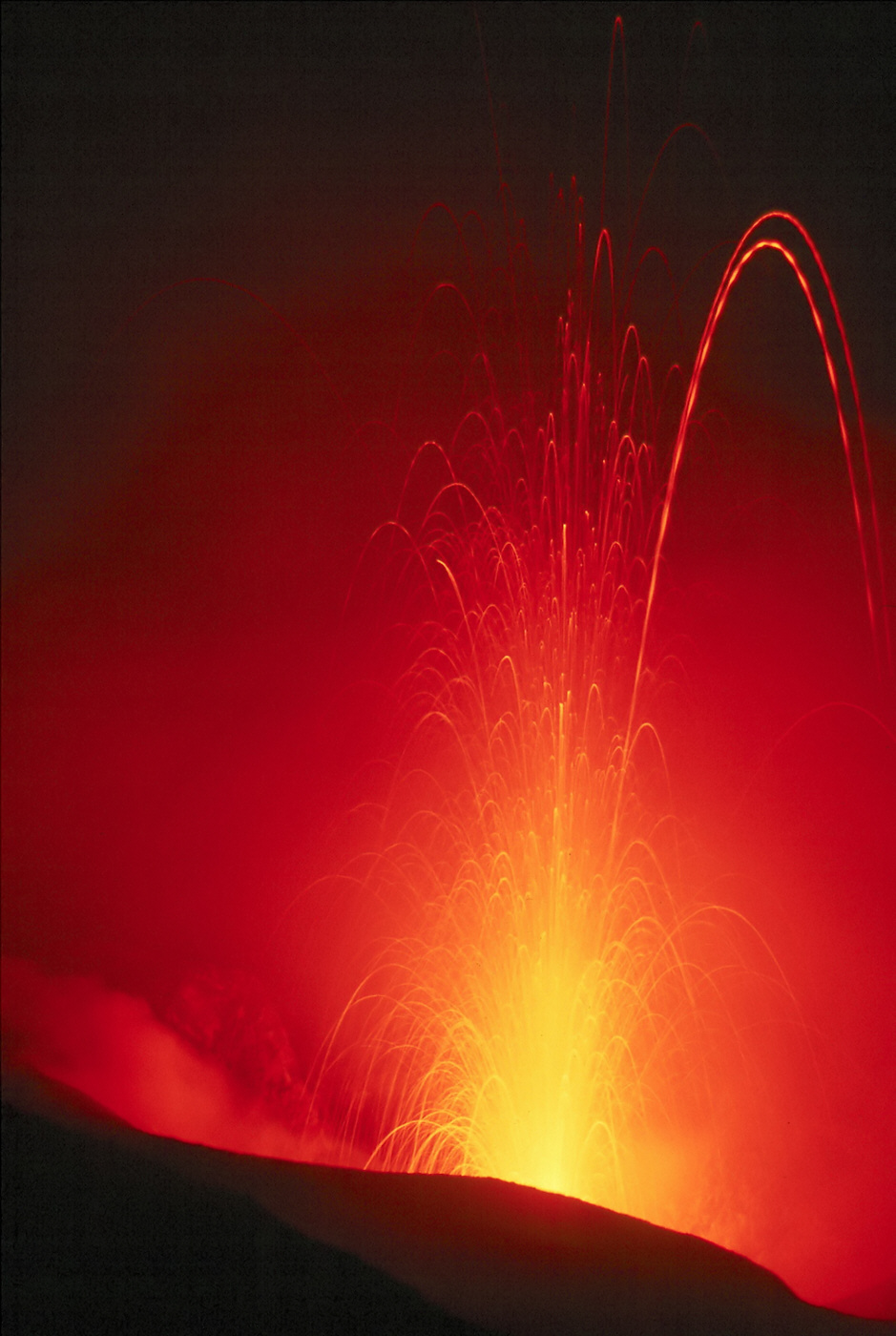
This is the Stromboli volcano in Italy erupting at night! The glowing orange streaks are pieces of lava flying about 100 metres into the air — as high as a 30-storey building! See source ↓
🗺️ Where do eruptions happen?
Most volcanoes sit along the edges of giant puzzle pieces of Earth's crust called tectonic plates. Many of them form a huge circle around the Pacific Ocean called the Ring of Fire — about 75% of the world's volcanoes live there!
📜 A bit of history
People have watched volcanoes for thousands of years. The ancient Romans believed the god of fire, Vulcan, worked his forge under a volcano — and that is where the word "volcano" comes from! The word "lava" comes from an Italian word meaning "to slide or fall."
📚 Picture Sources
- Photo 1 — Stromboli volcano erupting at night, Italy. From Wikimedia Commons (CC BY-SA 3.0): https://commons.wikimedia.org/wiki/File:Stromboli_Eruption.jpg
